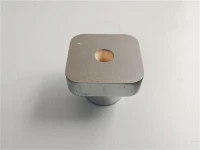
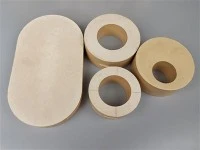
Zirconia Slide Plate vs Alumina Carbon Slide Plate: Which is better?
Oct 26, 2026
For ladle slide gate refractories, there is no universal "better" option. The selection depends on steel grade, casting cycle, slag condition and cost target. Changtai supplies both grades and composite zirconia-insert slide plates for steel continuous casting flow.
Alumina Carbon (Al₂O₃-C) Slide Plate
Alumina carbon slide plate is the conventional mainstream refractory for slide gates, made of fused alumina, graphite and anti-oxidants.
Strengths
- Lower raw material and production cost, simple manufacturing
- Good thermal shock resistance for routine temperature fluctuation
- Reliable for normal carbon steel, low-alloy steel and small-to-medium ladles
- Flexible for single-heat or low-frequency continuous casting
Limitations
- Poor resistance to calcium-bearing slag, deoxidized clean steel and high-alkali slag erosion
- Short service life, usually 1–3 heats; frequent plate replacement increases downtime and labour work
- Carbon oxidation risk under long high-temperature holding
Zirconia Slide Plate (Full Zirconia / Zirconia Insert Type)
Changtai zirconia slide plates adopt stabilized zirconia at the molten steel bore area, either full-zirconia monolithic plate or alumina-carbon body with zirconia core insert.
Strengths
- Outstanding slag and molten steel erosion resistance, especially for Ca-treated steel, silicon steel, high-grade clean steel
- Ultra-long service life: 5–10 times longer than standard alumina carbon plate in matching working conditions
- Dense structure, low porosity, stable sliding surface, less steel penetration and sticking risk
- Reduced ladle turnaround time and fewer refractory changeouts
Limitations
- Higher unit price due to high-purity zirconia raw material and isostatic pressing sintering process
- Not economical for low-value ordinary carbon steel casting
Quick Comparison Table
| Item | Alumina Carbon Slide Plate | Zirconia Slide Plate |
|---|---|---|
| Core material | Fused alumina + graphite | Stabilized zirconia (ZrO₂) |
| Erosion resistance | Medium | Excellent |
| Service life | 1–3 heats | Multiple heats, 5–10× longer |
| Cost | Low | High |
| Best for | Common carbon steel, low-alloy steel, cost-sensitive lines | Clean steel, Ca-treated steel, special steel, long sequence casting |
| Main risk | Carbon oxidation, slag washout | Higher initial investment |
Choose alumina carbon slide plate if you cast ordinary carbon steel with short sequences and tight refractory budget. It delivers stable performance with lower upfront cost.
Choose zirconia slide plate / zirconia insert composite plate for special steel, calcium-treated steel, long continuous casting sequences and large ladles. The longer campaign cuts refractory consumption, labour cost and ladle waiting time, bringing better overall economic benefit.
For most medium and large steel plants, a mixed configuration is widely adopted: standard alumina-carbon plates for common steel grades and Changtai zirconia slide plates for high-grade steel routes.