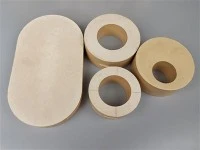
What Should I Check Before Buying Zirconia Slide Gate Plates
Nov 04, 2026
Zirconia slide gate plates are key refractory parts for steel ladle continuous casting. If the plates are not good enough, you may get hole enlargement, cracks, steel leakage and unexpected production stops. Many steel buyers only compare prices and skip important checks. Changtai lists practical points you need to look over before placing orders.
1. Check material grade and chemical report
There are two common types: plates with a zirconia insert only at the flow hole, and full zirconia plates for tough casting conditions. Ask your supplier for test certificates for every batch. Pay attention to ZrO₂ content, alumina, fixed carbon and stabilizer. Higher zirconia content helps resist slag washout. Carbon mix helps the part stand sudden temperature change and oxidation. Make sure the supplier does not switch to lower grade material without telling you.
2. Check physical performance data
- Bulk density and apparent porosity: Lower porosity stops molten steel and slag from seeping inside. Big differences in density between batches lead to unstable service life.
- Cold crushing strength and hot bending strength: Make sure the plate will not break under clamping force and high heat.
- Thermal shock resistance: Important because the plate heats up and cools down repeatedly during casting. Changtai uses stable raw material formula and fixed firing schedule to keep performance steady batch after batch.
3. Check size tolerance and flat sliding surface
Slide plates work as a matched pair. Uneven surface or wrong thickness creates gaps, which cause steel leakage and fast uneven wear. Check overall size, bore diameter, hole concentricity and flatness against your drawing. The contact sliding surface needs precision grinding. Confirm whether grinding is included in the price, or you only get unground fired blanks.
4. Check surface and internal defects
Do not accept plates with these problems:
- Through cracks, fine surface cracks and chipped edges
- Separation between the zirconia insert and the base body
- Foreign impurities, big holes and burnt marks on the sliding face
- Deformed flow hole or collapsed local area
Even tiny hidden cracks will quickly spread once they touch molten steel.
5. Tell your actual casting conditions for proper grade
Zirconia slide plates are not one-size-fits-all. Share these details with your supplier:
- Steel type: carbon steel, stainless steel, calcium treated steel or alloy steel
- Tapping temperature, holding time and ladle capacity
- Slag alkalinity and slag erosion level
- Required heats per set and your slide gate model
Changtai adjusts the formula for heavy-duty casting, instead of selling the same standard plate to every customer.
6. Test small batch first before bulk order
Always run a trial with small quantity. Mark trial plates clearly and record usable heats, wear speed and failure reason. Trustworthy suppliers keep the same raw material source, pressing and firing process unless they inform you. Ask for first article inspection and batch release records.
7. Check supplier qualification, packing and after-sale service
Check ISO certificate, in-house lab test ability and reference cases from steel plants. Zirconia plates are brittle. Confirm shock-resistant packing, pallet marks and loading method to avoid damage during shipping. Confirm technical support: installation guidance, failure analysis and settlement for quality problems.
Low price usually means lower zirconia purity, simplified firing or skipped grinding work. For safe continuous casting, stable quality and consistent performance matter more than unit price. Send your drawings or working condition data to Changtai for proper material suggestion and quotation. Our technical team will find the right zirconia slide gate plate for your ladle system.