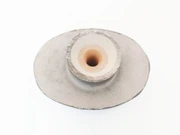
Why Does Tundish Slide Gate Plate Crack During Casting?
Oct 16, 2026
Tundish slide gate plate is a key refractory part for continuous casting. It controls molten steel flow and prevents steel breakout. Cracking is a common and dangerous failure seen on site. Once cracks grow during casting, steel and slag seep into the refractory, which may cause steel leakage, unexpected casting stops and production losses. Based on years of on-site service and refractory R&D, Changtai sorts out the real causes and practical fixes.
Thermal Shock - Main Reason for Cracks
Most plate cracks come from thermal stress. The slide plate is at room temperature before casting. When 1600°C molten steel hits the plate hole, a sharp temperature difference forms right away. The inner bore expands quickly while the outer part stays cold. Large tensile stress builds up on the plate surface. When stress exceeds the material's breaking strength, tiny radial cracks start from the nozzle hole and spread outwards.
Typical triggers:
Poor or uneven preheating for tundish and slide gate assembly
Fast tundish filling and sudden steel impact
Intermittent casting and repeated heating cycles
Cracks from thermal shock let slag and oxygen get inside. This speeds up spalling and makes cracks keep expanding.
Mechanical Stress & Wrong Installation
Lots of cracks are caused by mechanical load instead of high heat.
Misaligned assembly: uneven contact between top, middle and bottom plates creates local pressure spikes during sliding.
Over-tight bolts: thermal expansion during casting adds bending stress on the refractory. Loose clamping also makes plates shift and get hit.
Knocks during lifting or installation: invisible microcracks form before use, and quickly grow once heated by molten steel.
Unstable hydraulic pressure: pressure surges when opening or closing the gate create impact load on plates.
Thermochemical Corrosion & Material Deterioration
Molten steel and tundish slag attack the refractory structure at high temperature. Slag seeps between crystal grains, dissolves binding phase and weakens the plate. Carbon-containing refractories oxidize under high heat. Carbon loss leaves porous structure, lowering strength and thermal shock resistance. The weakened material cannot bear thermal and mechanical load, so cracks appear easily.
Raw material defects also matter: incomplete sintering, low purity and poor grain distribution reduce the plate's ability to resist thermal shock and erosion.
Operation & Process Issues
Wrong plate grade selection: standard plates cannot handle ultra-low carbon steel or high-speed continuous casting.
Frequent gate adjustment: unstable steel flow and repeated opening/closing increase friction and temperature fluctuation.
Long molten steel residence time in tundish, worsening slag corrosion.
Changtai's Practical Countermeasures
- Improve Material: Changtai zirconia toughened slide gate plates use high-temperature sintering. Zirconia toughening greatly lifts thermal shock resistance to stop radial cracks under rapid temperature change. Anti-oxidation coating reduces carbon oxidation and slag penetration.
- Standard Preheating: Use step and uniform preheating to cut temperature difference before steel feeding.
- Strict Assembly Check: Verify plate flatness and alignment; control bolt torque as required. Avoid impact during transport and installation.
- Optimize Casting Process: Match plate grade with steel type and casting speed, stabilize steel flow and reduce frequent gate operation.
- On-site Check: Scrap plates with visible microcracks before casting. Stop pouring at once if cracks show up to prevent steel breakout.
Tundish slide gate plate cracking comes from combined effects of thermal shock, mechanical stress, chemical corrosion and improper operation. Good material quality is the base. Standard preheating, assembly and casting processes are necessary. Changtai supplies customized tundish slide gate refractories and technical service for continuous casting lines to lower cracking risk and extend service life.
Contact Changtai for technical support on slide plate selection matching your casting conditions.