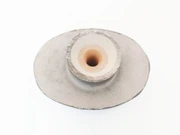
When should we replace old zirconia nozzle insert?
Nov 07, 2026
Zirconia nozzle inserts are core consumables for continuous casting tundish nozzles. Made of high-purity zirconia material, they feature excellent erosion resistance, thermal shock resistance and low wettability to molten steel. Even with superior performance, these inserts will gradually degrade under long-term contact with high-temperature liquid steel, slag and thermal cycling. Knowing the right replacement timing helps steel plants reduce casting accidents, stabilize casting speed and cut refractory cost.
Visual inspection signs for immediate replacement
Stop using and replace the zirconia nozzle insert once any of the following conditions appear during pre-casting check or on-line observation:
Obvious cracks, peeling or spalling on the inner bore surface. Cracks will expand rapidly under thermal stress, causing steel leakage or bore deformation.
Severe local erosion of the inner hole. The original circular bore turns irregular, with deep grooves or partial collapse. Uneven bore shape disturbs molten steel flow, triggers slag entrapment and worsens inclusion control.
Surface blackening, slag penetration and sticking steel that cannot be cleaned. Slag penetration damages the zirconia matrix, accelerating further corrosion.
Chipping on the inlet or outlet edge. Damaged edges change flow pattern and easily capture inclusions.
Dimensional & performance-based replacement rules
Besides visual checks, workshop operators should track dimension changes:
Measure the inner diameter regularly. When the bore expansion exceeds the allowable limit specified by technical standard, arrange replacement. Oversized bore leads to uncontrollable flow rate, which cannot be adjusted by stopper or slide gate.
Check wall thickness. If residual wall thickness is lower than the safety threshold, replace it in advance. Thin remaining zirconia layer cannot resist steel penetration.
For reused inserts: reject if repeated thermal cycles have caused latent internal cracks, even the surface looks intact. Hidden cracks are hard to spot and are major hidden dangers during long casting sequences.
Time-based sequence replacement principle
Many steel mills adopt sequence casting mode and set fixed service life for zirconia nozzle inserts:
For normal carbon steel casting: follow the designed heat sequence limit. Do not extend service life blindly to save refractory cost.
For high-alloy steel, ultra-low carbon steel and special steel grades: molten steel and tundish slag are more corrosive. The replacement cycle must be shortened.
Emergency stop and reheat: after unplanned shutdown, the insert suffers strong thermal shock. It is recommended to inspect strictly or replace directly, instead of continuing casting.
Risks of delayed replacement
Postponing replacement brings severe consequences:
Tundish breakout and steel leakage, causing equipment damage and safety hazards.
Unstable flow field, increased nozzle clogging, large amount of inclusions in finished steel.
Fluctuating casting speed, downgraded slab quality and higher rejection rate.
Unexpected production interruption, longer downtime and higher overall production loss.
Zirconia nozzle inserts cannot be used until complete failure. The replacement decision combines three factors: visual defect inspection, inner diameter / wall thickness measurement and casting sequence & steel grade requirement. Replace immediately when cracks, spalling, heavy erosion or over-limit bore expansion are found. For special steel grades and interrupted casting, adopt stricter replacement rules. Reasonable replacement schedule balances safety, slab quality and refractory consumption for continuous casting lines.