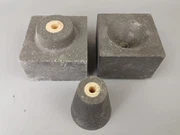
Which nozzle material wears out the quickest?
Nov 12, 2025
In the continuous casting process of steel, the tundish nozzle is one of the most critical refractory components at the bottom of the tundish. Its function is to control the flow rate of molten steel and guide the steel into the submerged nozzle. Due to prolonged exposure to high temperatures, high-velocity steel flow erosion, and chemical corrosion, nozzle wear has become a key factor affecting the stability of the continuous casting process and the quality of the cast slab. Tundishes made from different refractory materials exhibit significant variations in wear resistance. Among them, high-alumina tundishes wear out the fastest, while zirconia tundishes demonstrate the highest wear resistance.
Primary Factors Affecting Nozzle Wear
Mechanical Abrasion Wear
Molten steel flows at high velocity from the bottom of the ladle, generating intense erosion.
Chemical Corrosion Wear
Oxides and inclusions in the molten steel react with the refractory material, causing compositional changes and structural degradation.
Thermal Shock Spalling Wear
Rapid temperature fluctuations at the start and end of pouring induce thermal stresses, leading to cracking and spalling.
Comparison of Common Tundish Nozzle Materials
| Material Type | Main Composition | Characteristics | Relative Wear Rate |
|---|---|---|---|
| High Alumina (Al₂O₃ > 70%) | Bauxite, Corundum | Low cost but poor corrosion resistance | ★★★★★ (Fastest) |
| Zirconia–Corundum (ZrO₂–Al₂O₃) | Zircon Sand, Alumina | Good overall performance and cost-effectiveness | ★★★☆☆ |
| Magnesia–Carbon (MgO–C) | Magnesite, Graphite | Excellent thermal shock resistance, but carbon easily oxidizes | ★★★★☆ |
| Zirconia (ZrO₂ > 90%) | Stabilized Zirconia | Outstanding erosion and corrosion resistance | ★☆☆☆☆ (Slowest) |
Reasons for Rapid Wear of High-Alumina Nozzles
Chemically Reactive
The primary component of high-alumina nozzles is Al₂O₃, which readily reacts with FeO and MnO at high temperatures to form low-melting-point compounds. These reaction products create a molten layer that accelerates material spalling.
Microstructural Porosity
High-alumina refractories exhibit low sintering density and high porosity. Molten steel readily infiltrates these voids, causing internal erosion and localized spalling.
Poor Thermal Shock Resistance
Rapid temperature surges during initial pouring and abrupt drops during pouring cessation create thermal cycling. This repeated heating and cooling induces material cracking, accelerating spalling.
Significant Mechanical Abrasion
High molten steel flow velocity, particularly when the sliding nozzle has a large opening angle, results in intense localized impact forces. This causes rapid wear in the nozzle outlet region.
Optimization and Improvement Directions
To mitigate nozzle wear, the following measures can be implemented:
- Spray a zirconia protective layer onto the surface of high-alumina nozzles
- Employ a composite structure with an outer high-alumina layer and an inner zirconia layer
- Optimize flow field design to reduce erosion angles
- Strictly control molten steel cleanliness to minimize inclusion content
Improvement Measures in Production Practice
Employ composite nozzle structures: inner zirconia layer, outer high-alumina layer, balancing service life and cost.
Control molten steel flow velocity: optimize sliding nozzle opening to prevent localized erosion.
Regularly monitor nozzle wear: utilize machinery or thermal imaging cameras to track wear status.
Enhance installation quality: excessive clearance between nozzle and sliding plate causes leakage and localized overheating, accelerating wear.
Anyang Changtai Silicon Industry Co., Ltd. is a comprehensive manufacturer specializing in the design, processing, and sales of zirconia high-temperature products. If you require zirconia high-temperature products, please email us at: zhang@ayctgy.com. We will respond to your inquiry promptly upon receipt.