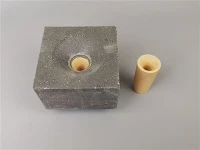
What Is the Typical Service Cycle of Zirconia Nozzle Inserts
Nov 21, 2026
Zirconia nozzle inserts sit in the core of tundish metering nozzles for continuous casting. There is no single fixed lifespan. The usual cycle is counted by heats or casting sequences, not just running hours.
For standard carbon steel with stable casting parameters, common zirconia inserts can run through 8 to 15 heats. Our optimized grades at Changtai can reach 20 to 30 heats under well-controlled casting conditions. Quick-change type inserts often fall in the 10–15 heats range for many small billet lines.
Several factors change the actual service cycle. Steel grade matters most. Calcium-treated steel, ultra-low carbon steel, stainless steel and alloy steel cause faster erosion or alumina clogging. These may shorten the usable time. Higher casting speed, overheated molten steel and unstable slag conditions also speed up bore enlargement. Material quality and sintering process make a big difference too. Dense, well-stabilized zirconia resists thermal shock and steel penetration better. Poor preheating, wrong installation or frequent sudden stops will lead to early cracking or blockage.
Operators replace the insert when the bore size drifts beyond the allowed range, flow becomes unstable, clogging cannot be cleared, or cracks and steel penetration appear. Waiting until complete failure risks casting interruption and bad billet quality.
The goal is not only chasing the maximum number of heats. Matching the zirconia grade to your steel grade and casting routine gives steady flow control, fewer shutdowns and lower overall refractory cost.
Changtai supplies zirconia nozzle inserts tailored for different continuous casting requirements. If you want a more accurate expected service cycle for your production line, send your casting parameters to our team.