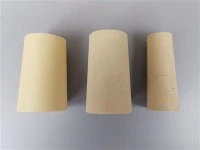
What Causes Bore Enlargement on Zirconia Nozzle Inserts
Nov 21, 2026
Zirconia nozzle inserts are commonly used in continuous casting to control molten steel flow. When their inner hole gets bigger, the flow becomes unstable and may lead to casting problems. This issue comes from several practical reasons.
First, abrasive washing. Molten steel carries hard impurities. These solid particles keep rubbing and cutting the inner wall of the hole. The inlet and outlet edges wear faster and turn rounded. Faster casting speed or more inclusions makes this wear worse.
Second, chemical reaction with slag. Stabilized zirconia needs additives to keep its structure stable. Slag and oxide from molten steel eat away these additives. The zirconia structure breaks down, grains loosen and wash off with the steel flow. Porous inserts get damaged more quickly.
Third, thermal stress and phase change. Quick temperature changes create tiny cracks inside the insert. Steel and slag seep into these cracks, causing pieces to peel off. Repeated heating and cooling loosen the material structure over time.
Fourth, production quality gaps. Low-quality raw powder, uneven pressing or improper sintering leaves hidden pores and weak spots. Machining scratches on the inner hole also become starting points for wear.
Fifth, improper installation and operation. Misaligned inserts create biased flow that wears one side heavily. Vibration, overuse beyond service life and frequent process changes speed up hole expansion.
Simple fixes: pick the right stabilized zirconia grade, improve steel cleanliness, follow correct preheating rules, choose high-density sintered parts, and check bore size regularly for timely replacement.