Tundish Metering Nozzle Working Principle
Oct 24, 2026
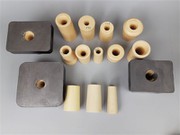
The tundish metering nozzle is a key refractory part for steel continuous casting. Its core function is to control the flow rate of molten steel flowing from tundish into the crystallizer.
Its working principle is based on the orifice flow formula. Under stable tundish molten steel level and constant steel temperature, the flow of molten steel is mainly decided by the inner bore diameter of the metering nozzle.
Molten steel flows through the precision zirconia inner hole. When the bore size keeps unchanged, the steel flow and casting speed stay steady. The nozzle is made of high zirconia material to resist erosion and corrosion from high-temperature molten steel, slowing bore expansion.
During production, changes will affect the flow. If the tundish liquid level rises, static pressure increases and steel flow goes up. If the inner hole is worn or eroded after long-time casting, the bore becomes larger. The flow will increase, and casting speed can no longer be controlled. At this time, the nozzle needs to be replaced.
This nozzle has no adjusting mechanism. It belongs to fixed orifice flow control. Unlike sliding gate or stopper rod, it cannot adjust flow online. Once installed, its flow setting is fixed by its inner diameter specification.
Main working points
Stable liquid height of molten steel in tundish provides static pressure driving force.
Precision zirconia bore is the throttling section to limit steel flow.
Flow rate matches the set casting speed of billet or bloom.
Service life ends when inner hole erosion exceeds allowable range.
Application notes
Tundish metering nozzle fits continuous casting lines that run stable steel grades and fixed casting speed. It features simple structure and low operation cost. It is widely used for small billet and round billet production.
If you need steady molten steel flow control for your caster, send your casting parameters for our technical proposal and quotation.