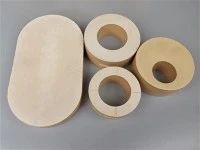
Understanding The Service Life Of Zirconia Nozzle Insert
Nov 25, 2026
Zirconia nozzle inserts are fitted inside tundish nozzles for continuous steel casting. They come into direct contact with hot molten steel and slag. Their working time affects how smoothly casting runs, how often you need to change parts, and your overall production output.
There is no fixed lifespan. It changes based on material type, steel grade, flow speed and preheating steps. Normal coarse grain stabilized zirconia inserts usually work for 8–12 hours. Better medium-grade ones can last 14–20 hours. Dense, low-porosity composite inserts can run 24 hours or longer if casting conditions stay stable.
What wears out the insert quickly
The material formula matters first. Zirconia stabilized with yttria, magnesia or calcia acts differently under high heat. Stabilizer separation, grain growth and phase changes will create internal cracks and weaken the insert. For most casting jobs, yttria-stabilized zirconia holds up better than magnesia-stabilized grades.
Thermal shock is a common failure reason. Big temperature differences across the insert wall make it expand unevenly, forming tiny cracks and damaging the structure. This happens easily during cold start, steel grade switch or stop-start casting. Slag seeps in, reaction layers form, and fast-flowing molten steel scours the inner hole. The bore gets larger, or alumina builds up and blocks the flow.
Manufacturing quality also counts. Inserts with low porosity, high density and even sintering resist slag penetration and wear much better. High porosity inserts wear faster, even with the same zirconia content.
When you should replace the insert
Do not wait until it cracks or breaks. Steel plants check the bore size, flow stability, clogging and surface peeling. Once the inner diameter goes over the allowed limit, casting speed becomes unstable and steel quality drops - even if the insert still looks intact.
Simple ways to get longer service life
Choose the right zirconia grade matching your steel and casting plan. Follow the preheating procedure carefully to avoid thermal shock. Control slag composition and flow speed to reduce corrosion and scouring. Use anti-clogging glaze or coating if needed. Keep records of wear after each cast, so you can arrange replacement ahead of time and avoid sudden shutdowns.
How long a zirconia nozzle insert lasts comes down to its stabilizer type, internal structure, casting settings and site operation. Understanding its wear pattern helps steel mills reduce unexpected stops, cut refractory costs and keep molten steel flowing steadily for longer casting sequences.