Are Zirconia Containing Sliding Gate Plates Worth Using?
Nov 20, 2026
Lots of refractory buyers and plant engineers face this question day in and day out. Standard alumina-carbon sliding plates are cheap and widely used, but they struggle badly when slag turns aggressive. Zirconia-containing options cost more, so many teams stop to ask if the upgrade actually pays off.
The short answer is straightforward: these plates deliver clear value, but only for the right casting conditions. They are not a fit for every mill's workflow.
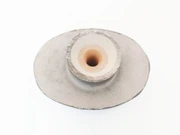
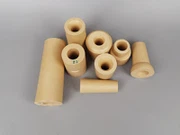
The zirconia sliding gate plates we produce at Changtai are isostatically pressed zirconia refractory parts. You can see different shapes in our product range: oval slide plates, solid zirconia rings and split zirconia inserts. We only focus on zirconia grades, no standard alumina-carbon plates.
Zirconia is the core material here. Its biggest advantage is strong resistance against slag attack. Calcium-treated steel is the main pain point for ordinary alumina-carbon plates. Calcium-rich slag eats the material away quickly, opening up the bore and making molten steel flow hard to control. Zirconia holds up far better against this type of corrosion.
Zirconia also improves thermal shock resistance. The plate cycles rapidly between extreme heat and cooling every time the sliding gate opens and closes. Zirconia's phase transformation absorbs thermal stress, lowering the chance of spalling or cracking during long sequence casting. That means fewer unplanned plate swaps and less downtime on the caster.
From what we see on site, well-made isostatic pressed zirconia sliding plates run more heats than standard alumina-carbon alternatives. They keep the bore geometry consistent longer, which stabilizes steel flow and helps produce cleaner, better-quality billets. They are the go-to pick for stainless steel, electrical steel, clean steel and calcium-treated steel. Many operations pick the split zirconia ring design; segmented rings help ease thermal stress further while maintaining outstanding anti-slag performance.
That said, the tradeoffs cannot be ignored. Zirconia raw materials carry a premium. These plates usually run 30% to 50% higher in unit price compared to regular Al-Carbon plates.
If your mill mostly casts plain carbon steel with short sequences and low-corrosion slag, you will not see much gain in service life. The extra refractory expense just pushes up your tonnage steel cost.
It is also important to set realistic expectations. Better material does not mean failure-proof. Poor preheating, uneven clamping force or rough handling can still crack zirconia plates. The material fixes corrosion risks, not operational mistakes.
Where zirconia sliding plates make good economic sense
- You regularly cast Ca-treated steel, stainless steel, IF steel or high-grade alloy steel
- You run long continuous casting sequences and aim to cut plate change frequency
- Your current plates fail early mainly from calcium slag erosion
- You need consistent molten steel flow and stable billet quality
Where zirconia plates are not the right fit
- Your output is mostly plain carbon steel with short casting runs
- Refractory budgets are tight, and your existing plates already hit target heats
- The slag in your process has low corrosion potential
Closing thought
Do not base your call only on piece price. Work out your total cost per ton of steel. Factor in service life, breakout risk, ladle change frequency and casting yield.
Zirconia-containing sliding gate plates are a high-performance solution built for harsh casting environments. They only create real savings when your working conditions match their strengths.
Changtai specializes in isostatic pressed zirconia sliding gate plates and zirconia inserts. We do not carry standard alumina-carbon grades. We can customise shapes, sizes and zirconia formulas to match your steel grades and casting schedules. Get in touch with us for a tailored recommendation.