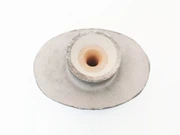
Why does tundish metering nozzle crack during continuous casting?
Jul 23, 2026
The tundish metering nozzle is a core refractory for controlling molten steel flow and casting speed in continuous casting. Its cracking easily causes steel leakage, production shutdown and safety risks. Changtai summarizes the main causes and solutions as follows:
Main Cracking Causes
(1) Thermal Shock & Thermal Stress (Primary Cause)
Insufficient or uneven preheating leads to huge temperature difference when the cold nozzle contacts high-temperature molten steel, producing excessive thermal stress. Frequent casting start-stop causes repeated cold and heat cycles, triggering thermal fatigue and crack expansion.
(2) Material & Production Defects
Inherent microcracks and pores formed during pressing and firing become crack sources. Zirconia phase transformation causes volume change, and poor bonding between the zirconia working layer and alumina substrate easily leads to interface cracks.
(3) Improper Mechanical Operation
Excessive clamping force, misaligned assembly and external impact produce concentrated mechanical stress. Long-term friction with sliding gate plates also induces crack initiation.
(4) Chemical Erosion
Molten steel and tundish slag penetrate into microcracks at high temperature. The volume expansion of infiltrated substances forms a wedging effect, accelerating crack penetration and expansion.
Optimization Solutions
1. Optimize refractory formula and firing process to improve thermal shock resistance and eliminate inherent defects.
2. Implement staged slow baking to ensure uniform nozzle temperature and avoid sharp temperature changes.
3. Standardize installation to control clamping force and ensure concentric assembly.
4. Stabilize casting parameters, control molten steel superheat and reduce frequent start-stop operations.
5. Strengthen pre-use inspection to reject defective nozzles.